 By BusinessLeadHub.Blog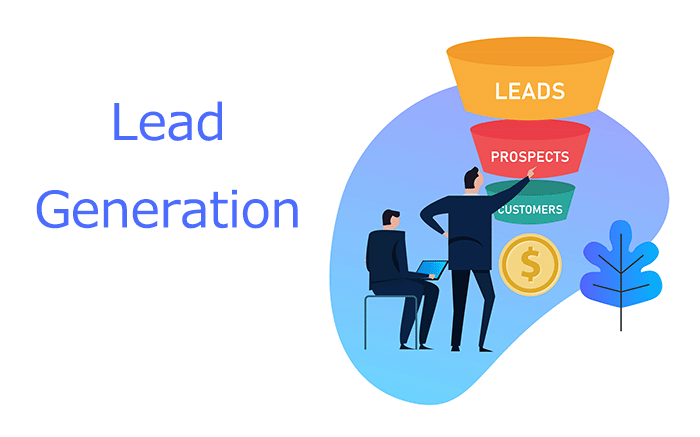
Introduction: Why Lead Generation Matters for Every Startup
Every startup begins with an idea, but ideas alone don’t build successful businesses. What truly drives growth is a steady flow of qualified leads—people who show genuine interest in your product or service and are likely to convert into paying customers. Lead generation is the lifeline of any new company because it ensures consistent sales opportunities, increases brand awareness, and helps you compete with bigger players in your industry.
For startups that often operate with limited budgets and resources, mastering smart and cost-effective lead generation tactics can make the difference between failing early or scaling fast.
1. Build a Strong Online Presence with a Professional Website
Your website is often the first point of contact between your startup and potential customers. A clean, professional, and user-friendly website builds immediate trust and credibility. Visitors should instantly understand what your startup does, whom it serves, and why it matters. A strong website layout includes clear navigation, engaging visuals, and persuasive copy that guides users deeper into the buying journey. For startups, the website isn’t just a digital brochure—it’s a 24/7 lead-generating machine when optimized correctly.
Another critical aspect is ensuring your website is fast and mobile-friendly. More than half of online visitors browse on mobile devices, and a slow site results in high bounce rates. This directly impacts your ability to generate leads because visitors abandon the site before they even see your offers. Tools like Google PageSpeed Insights help startups diagnose performance issues and fix them early.
2. Use Landing Pages to Capture Qualified Leads
Landing pages convert visitors into leads by focusing on a single offer such as a free guide, consultation, or signup. Unlike homepage content, landing pages remove distractions and present one goal with one call to action (CTA). This increases the likelihood that visitors will complete the action you want them to take. Startups should create multiple landing pages tailored to different customer segments, campaigns, or promotions.
Effective landing pages include benefit-focused headlines, simple forms, trust elements (like testimonials or stats), and clear CTAs. When optimized correctly, they dramatically improve conversion rates. A/B testing is also valuable—experimenting with different elements like button colors, form fields, or headlines helps identify what works best.
3. Leverage SEO to Attract Long-Term Organic Traffic
Search Engine Optimization (SEO) is one of the most cost-effective lead generation tactics. When your startup ranks on Google for relevant keywords, you receive consistent traffic without paying for ads. This organic visibility builds authority in your industry and helps attract high-intent visitors who are actively searching for solutions your business offers. SEO requires time and patience, but the long-term rewards are extremely high for startups that invest early.
Keyword research is the foundation of a strong SEO strategy. Startups should target keywords that reflect their niche, user intent, and competition level. Writing in-depth, high-quality blog content around those keywords increases your chances of ranking. Additionally, optimizing on-page elements such as titles, meta descriptions, headings, and alt tags ensures search engines understand your content clearly.
4. Publish High-Quality Blog Content Regularly
Content marketing is one of the most reliable ways to attract and nurture leads. Publishing high-quality, informative blog posts positions your startup as an expert in its industry. Potential customers appreciate valuable content that answers their questions, solves their problems, or teaches them something new. Over time, this builds trust and encourages visitors to consider your offerings more seriously.
Consistency is key when implementing a blogging strategy. A regular posting schedule keeps your website fresh and signals to search engines that your content is active. Each blog should include an internal call to action inviting readers to download something, book a demo, or join a newsletter. This way, your blogs not only attract traffic but also convert readers into leads.
5. Use Social Media Marketing to Reach and Engage Your Audience
Social media platforms are powerful tools for startups to increase brand visibility, engage customers, and drive targeted traffic. Startups should choose platforms where their audience spends the most time—whether that’s Facebook, Instagram, LinkedIn, TikTok, or X (Twitter). Posting relevant content consistently helps build a community and encourages interactions that can lead to potential leads.
Engaging with your audience through comments, live sessions, polls, and DMs increases trust and loyalty. Social media ads, especially on Facebook and LinkedIn, allow startups to target specific demographics, interests, or business categories. This precision makes social media an excellent pipeline for generating consistent, low-cost leads.
6. Create Lead Magnets to Offer High-Value Resources
Lead magnets are free resources offered in exchange for a visitor’s email or contact information. They provide value upfront, helping startups build trust and nurture leads over time. Effective lead magnets include eBooks, checklists, templates, case studies, training videos, or discount coupons. The key is to offer something irresistible—and highly relevant—that solves a real problem for your audience.
Startups often see significant growth in their email lists by deploying multiple lead magnets across their website, blog, and social channels. The more specific and targeted the lead magnet is, the better the conversion rate. Once leads download your resource, you can nurture them through automated email campaigns.
7. Implement Email Marketing Automation for Lead Nurturing
Email marketing is one of the most powerful tools for startups because it allows direct communication with potential customers. Automated email sequences help educate, engage, and convert leads over time without requiring manual effort. A welcome sequence introduces new subscribers to your brand, while a nurturing sequence provides helpful tips, case studies, or special offers that move customers closer to buying.
Personalization is crucial in email marketing. Tailoring email content to customers’ needs or behavior improves engagement and conversions. By monitoring metrics such as open rates, click-through rates, and conversions, startups can refine their campaigns and make them more effective.
8. Utilize Paid Ads for Immediate Lead Generation Results
Paid advertising allows startups to generate leads quickly, especially when organic methods take time. Platforms like Google Ads, Facebook Ads, LinkedIn Ads, and YouTube Ads offer precise targeting options. With paid campaigns, you can reach users who are actively searching for your services or match your ideal customer profile. This makes paid ads extremely effective for getting leads fast.
However, startups must manage their budgets carefully. Successful paid advertising requires monitoring key metrics such as cost per click (CPC), cost per lead (CPL), and return on ad spend (ROAS). A/B testing ad copies, creatives, and landing pages ensures your campaigns become more efficient over time.
9. Deploy Chatbots and Live Chat to Engage Visitors in Real-Time
Website visitors often have quick questions or need assistance before taking action. Chatbots and live chat tools help startups respond instantly, improving the user experience and capturing leads that might otherwise leave. Automated chatbots can qualify leads, schedule appointments, and answer FAQs, making them highly efficient.
Live chat support also signals that your business cares about customer service and is easily reachable. This builds trust and increases conversions. For startups with small teams, chatbots provide 24/7 support without requiring human resources.
10. Offer Free Trials or Freemium Versions to Attract Users
Free trials lower the barrier to entry and allow potential customers to experience your product firsthand. This tactic is especially powerful for startups offering software, tools, or subscription-based services. Once users see the value of your product, many will upgrade to a paid version. Offering a freemium version—a basic free plan with paid upgrades—is another highly effective growth strategy used by many successful startups.
Clear onboarding and helpful tutorials improve the free trial experience, making users more likely to continue using your service. Follow-up emails and in-app messages guide users through the process and highlight the benefits of upgrading.
11. Use Referral Programs to Grow Through Word of Mouth
Referral programs encourage your existing customers to invite others to try your product. This tactic works extremely well because people trust recommendations from friends or colleagues. Startups can offer incentives such as discounts, credits, or rewards for successful referrals, motivating customers to participate actively.
Word-of-mouth marketing increases credibility and reduces customer acquisition costs. Referral programs work best when the process is simple, automated, and promoted regularly within your user base.
12. Attend Networking Events and Startup Conferences
In-person and virtual networking events allow startups to meet potential clients, partners, and investors. Although digital marketing is powerful, human connections still play a significant role in brand growth. Speaking at events or participating in panel discussions also positions you as an authority in your industry.
Networking events provide opportunities to build relationships, exchange business cards, and follow up with potential leads. Startups should always prepare elevator pitches, product demos, and marketing materials before attending events.
13. Collaborate with Influencers for Wider Reach
Influencer marketing gives startups access to new audiences through trusted personalities. Micro-influencers, in particular, offer high engagement levels at a low cost, making them ideal for small businesses. Partnering with influencers who align with your brand helps promote your product authentically.
Influencers can share reviews, tutorials, unboxings, or case studies. These creative collaborations increase brand exposure and generate highly targeted leads from people who trust the influencer’s recommendations.
14. Use Webinars to Educate and Convert Leads
Webinars are one of the most impactful educational tools for lead generation. They allow startups to present value-rich content while engaging with attendees in real-time. Topics can range from industry trends to product demos or expert insights. Webinars attract serious prospects and help build authority.
After the webinar, follow-up emails with replays, summaries, or offers help convert interested attendees into customers. Startups can host ongoing webinars monthly or quarterly to continuously attract new leads.
15. Monitor Analytics and Optimize Your Lead Generation Strategy
No lead generation strategy is effective without measurement. Startups must track key performance indicators such as website traffic, conversion rates, lead quality, and customer acquisition costs. Analytics tools like Google Analytics, Hotjar, and CRM dashboards provide valuable insights.
By consistently reviewing and optimizing your campaigns, you ensure that your lead generation efforts remain efficient and profitable. This data-driven approach helps startups make informed decisions and scale faster.
Conclusion: Lead Generation Is the Engine of Startup Growth
Lead generation is not a single action—it is a strategic combination of tactics that work together to attract, engage, and convert potential customers. Startups must focus on building strong online foundations, investing in high-value content, leveraging automation, and continuously optimizing their marketing efforts. When executed correctly, these strategies create a powerful lead generation engine that drives long-term business growth.
Whether you’re building awareness, nurturing prospects, or converting leads into loyal customers, the tactics in this guide give your startup the roadmap needed for consistent and sustainable growth.