 By BusinessLeadHub.Blog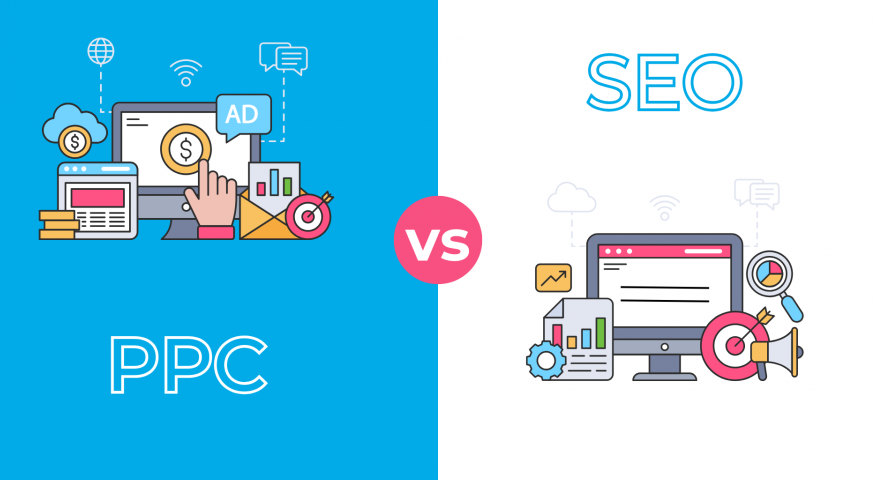
In the digital landscape where businesses compete aggressively for online visibility, two marketing channels consistently dominate strategic discussions: SEO and PPC. Search Engine Optimization (SEO) and Pay-Per-Click advertising (PPC) are both powerful approaches that help businesses reach potential customers through search engines such as Google, Bing, and YouTube.
However, business owners, startups, marketers, and agencies often face a common question—which one grows a business faster? The answer depends on goals, budget, competition, timeline, and business maturity. To make the right decision, it’s important to understand how each channel works, its long-term impact, cost structure, scalability, challenges, and growth potential.
Understanding the Basics: What Is SEO?
SEO (Search Engine Optimization) refers to the process of improving a website’s structure, content, user experience, authority, and visibility to appear higher in organic search engine results. When users search online for your products, services, or industry topics, SEO helps your website appear naturally, without paying for every click.
SEO focuses on several strategic elements such as keyword research, content optimization, technical improvements, site speed, backlink building, user engagement, and search intent alignment. The core benefit of SEO is that once ranking is achieved, search traffic often becomes consistent, scalable, and cost-effective. Unlike paid campaigns, you do not pay for each visitor.
However, SEO takes time. For competitive industries, it may require several months to a year to attain strong rankings. For this reason, many startups wonder whether PPC offers faster results—but speed must also be evaluated in relation to sustainability and profit-after-cost.
Understanding the Basics: What Is PPC?
PPC (Pay-Per-Click) advertising is a digital marketing model where businesses pay for each click or visit generated from their sponsored ads. These ads appear at the top or bottom of search results, on websites, social platforms, YouTube, or Display Networks. The most common PPC platform is Google Ads, though Facebook Ads, Instagram Ads, LinkedIn Ads, TikTok Ads, Amazon Ads, and Microsoft Ads are also prominent.
Unlike SEO, PPC delivers instant visibility. A campaign can be launched today, and ads may start appearing within hours. For businesses that need immediate customer acquisition, speed is a major advantage. PPC is also precise—you can target users by keyword, location, demographics, interests, device, user behavior, and more. This makes PPC one of the best short-term revenue-driving channels.
But PPC traffic is not free. Costs depend on competition, bidding strategy, keyword demand, and industry CPC rates. Some industries like finance, insurance, real estate, and legal services have extremely high CPCs. Once ad spending stops, traffic disappears instantly—meaning PPC does not accumulate long-term momentum the way SEO does.
How SEO Helps a Business Grow Faster
SEO is usually seen as a long-term engine of business growth. However, many businesses fail to realize that SEO can also create rapid growth—especially when executed with the right structure and competitive strategy. Let’s explore how SEO accelerates business performance.
1. Sustained Growth Over Time
SEO grows traffic cumulatively. Once a page ranks on the first page of Google, it can attract traffic day after day, with little additional cost. This means customer acquisition becomes cheaper over time. PPC, in contrast, requires continuous investment—once you stop spending, visibility ends immediately.
2. Higher Trust and Credibility
Users often trust organic results more than ads. Ranking #1 organically helps a business appear more reliable, established, and authoritative in its niche. This brand trust helps increase conversion rates and brand recall.
3. Lower Cost per Lead in the Long Run
SEO has higher upfront investment (content creation, link building, technical optimization), but once rankings strengthen, the cost per lead decreases dramatically. For businesses that plan 2-3 years ahead, SEO becomes the most profitable channel.
4. Visibility Across Multiple Search Stages
Through SEO, businesses can target users at every stage of intent—awareness, research, comparison, and final purchase. Content can include how-to articles, FAQs, landing pages, product pages, category pages, or comparison articles. PPC is mostly limited to transactional search unless supported by large budgets.
5. Competitive Edge That’s Hard to Reverse
If a business develops strong domain authority, solid backlink profiles, and consistent top rankings, competitors often need months of effort to catch up. This creates a long-lasting competitive shield.
6. Better ROI Compounding
While PPC resets every time you turn off the campaign, SEO investments stack up. Content, organic backlinks, and technical strength accumulate long-term value. This makes SEO not just a marketing tactic—but a business asset.
How PPC Helps a Business Grow Faster
PPC is widely regarded as the fastest way to drive immediate results. Businesses that need new leads quickly often rely on PPC, especially in competitive sectors. Let’s explore how PPC accelerates growth.
1. Instant Visibility
A PPC campaign can generate visibility and clicks within hours. New businesses that haven’t built organic presence can launch PPC to acquire customers right away.
2. Data-Driven Decision Making
PPC platforms give real-time insights—CTR, cost per click, conversion rate, demographics, user behavior, keyword performance, and revenue. This allows businesses to rapidly optimize spending, ads, and landing pages.
3. Laser-Focused Targeting
PPC allows targeting by multiple dimensions—location, device, age, gender, interests, profession, search intent, and more. This makes PPC extremely effective for reaching the right customer with the right offer at the right moment.
4. Scalable Budget Control
Businesses can increase or decrease spending instantly. If campaigns are profitable, budgets can scale to multiply results within days.
5. Better for Limited-Keyword Markets
Some businesses have limited search demand—such as niche B2B products. PPC helps such businesses capture their entire market demand instantly, without waiting for SEO maturity.
6. Perfect for Seasonal or Time-Sensitive Offers
Diesel generators during power outages, winter jackets during seasonal demand, real estate bookings, event registrations, and holiday sales often require fast visibility. PPC is ideal for such time-critical campaigns.
Which One Grows Your Business Faster? A Direct Comparison
To determine which channel grows a business faster, we must evaluate multiple criteria:
1. Speed of Results
- PPC wins.
PPC can produce results the same day campaigns are launched. SEO usually takes weeks to months to deliver noticeable results, especially in competitive industries.
2. Cost Efficiency
- SEO wins in the long run.
PPC delivers predictable results, but costs rise over time. SEO requires effort up front, but traffic becomes cheaper and more profitable as rankings stabilize.
3. Sustainability
- SEO wins.
SEO traffic continues even if budgets decrease. PPC stops immediately when spending stops.
4. Conversion Rate
- Tie, depending on execution.
PPC can convert faster because users clicking ads often have transactional intent. However, well-optimized SEO landing pages can also convert strongly, especially when brand trust builds over time.
5. Competition
- PPC has higher short-term competition costs.
When multiple businesses bid for the same keywords, CPC increases. SEO competition depends on content quality, domain authority, and link strength. Rankings can be earned—while PPC rankings must be purchased continuously.
6. User Trust
- SEO wins.
Most users scroll past ads to organic results. Multiple studies show users trust SEO listings more than paid ads, which boosts conversion probability.
When PPC Is Better for Business Growth
PPC helps businesses grow faster when:
- They need immediate results.
- The business is new with no organic presence.
- The product launch is time-sensitive.
- The industry has low competition and low CPC.
- Lead value is high (legal, medical, SaaS, real estate).
- The business has budget available for testing and scaling.
If a business has a limited market and wants to dominate fast, PPC is a direct weapon. It is especially valuable for high-ticket services where one conversion justifies large ad spending.
When SEO Is Better for Business Growth
SEO is the better strategy when:
- The business wants compounding long-term ROI.
- The goal is continuous brand visibility.
- The company wants to reduce advertising dependence.
- The niche has large content and search opportunity.
- Long-term advantage matters more than instant results.
SEO becomes more powerful as a business grows, because mature websites with history, authority, and strong content outrank new competitors strongly. Over time, SEO becomes the most profitable channel in digital marketing.
Why Combining SEO and PPC Often Works Best
Many successful companies stop asking “SEO vs PPC?” and instead adopt both. Each strengthens the other, and together they create a marketing system that accelerates growth faster than either channel alone.
How PPC Supports SEO
- PPC ads provide quick keyword data.
- Businesses can test keyword conversion rates before investing in SEO.
- Ads help promote new landing pages.
- Remarketing increases organic conversion rates.
How SEO Supports PPC
- High organic rankings lower pressure on ad budgets.
- Better content reduces dependency on paid clicks.
- SEO landing pages improve Google Quality Score, lowering PPC costs.
- Strong SEO credibility increases trust in ads.
Shared Strategy Example
A business can:
- Launch PPC for immediate leads.
- Build SEO content to rank organically over time.
- Reduce ad spending as SEO rankings solidify.
- Maintain both channels for maximum market domination.
This combined approach creates a short-term and long-term engine for continuous growth.
Real-World Example: Startup Growth Scenario
Imagine a new business offering digital marketing services. With no ranking history, SEO alone might take months to generate leads. But PPC can start delivering inquiries within 24 hours, allowing revenue to begin immediately. While campaigns run, the business produces SEO content, builds backlinks, and increases authority. After several months, search rankings improve, and leads start coming from SEO as well. At this point, PPC spending can be reduced or reallocated for high-value situations.
Which One Is Better for Different Business Types?
Local Businesses
- PPC brings immediate foot traffic and calls.
- SEO helps build long-term dominance for local keyword rankings.
- Best strategy: run both.
E-Commerce
- PPC supports product launches and seasonal sales.
- SEO creates steady long-term product search traffic.
- Best strategy: combine.
B2B Services
- PPC targets buyers directly and quickly.
- SEO establishes expertise, trust, and lead nurturing.
- Best strategy: PPC for leads now + SEO for stronger long-term pipeline.
Startups
- PPC helps break into the market fast.
- SEO becomes the primary acquisition channel later.
- Best strategy: split investment.
Established Brands
- SEO can drive millions in annual profit without advertising dependency.
- PPC expands reach and retargets warm audiences.
- Best strategy: SEO first, PPC for scale.
Important Metrics to Measure for Growth
For SEO
- Organic traffic
- Keyword rankings
- Domain authority
- Bounce rate
- Conversion rate
- Leads generated
- Cost per lead over time
- Backlinks earned
- Page experience and Core Web Vitals
For PPC
- CTR (Click-Through Rate)
- CPC (Cost per Click)
- Quality Score
- CPA (Cost per Acquisition)
- ROAS (Return on Ad Spend)
- Impression share
- Conversion rate
- Landing page performance
A business that measures both channels accurately can understand which channel contributes more efficiently to sustainable growth.
Challenges of SEO
While powerful, SEO is not without challenges:
- It takes time to see results.
- Competitive industries require strong off-page SEO.
- Google algorithm updates can affect rankings.
- Quality content production requires ongoing commitment.
- Technical SEO issues can harm performance.
Thus, SEO requires steady execution, strategic patience, and a long-term mindset.
Challenges of PPC
PPC has its own limitations:
- Costs can rise unpredictably.
- Some industries have extremely high CPC.
- Leads disappear once campaigns stop.
- Poor targeting wastes budget quickly.
- Click fraud and bots can burn spend.
- Businesses may rely too heavily on ads.
PPC requires skilled management, testing, optimization, and consistent budget to remain profitable.
Solution: Which One Helps Your Business Grow Faster?
If the definition of “faster” means results this week, then:
- PPC is the fastest growth channel.
If the definition of “faster” means building momentum that keeps accelerating, then:
- SEO grows businesses faster over the long term.
But in the real world of digital competition:
- The fastest and smartest growth happens when both are used together.
PPC fuels rapid customer acquisition.
SEO builds brand authority, lasting visibility, and profit that compounds over time.
Businesses that successfully scale often begin with PPC, grow with SEO, and eventually rely on both as dual engines of digital success. Instead of asking which is better forever, the more strategic question is:
Which combination of SEO and PPC will grow your business fastest based on your budget, industry, timeline, and goals?
The ultimate answer is that both channels matter—and when aligned, they deliver unmatched digital growth, revenue scalability, and long-term competitive power.